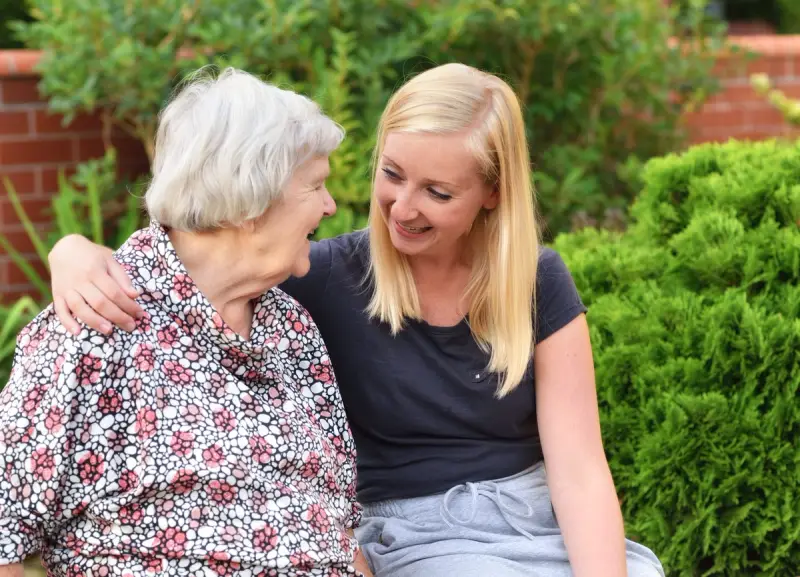
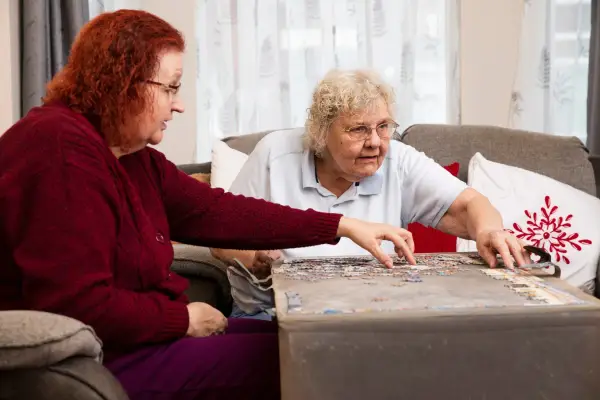
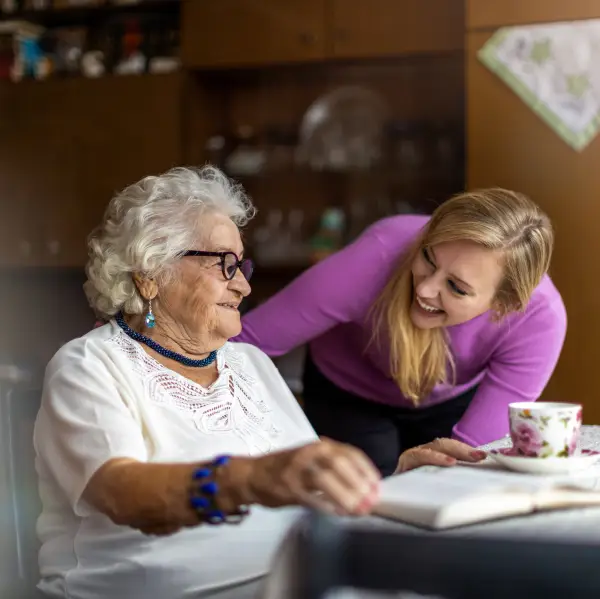
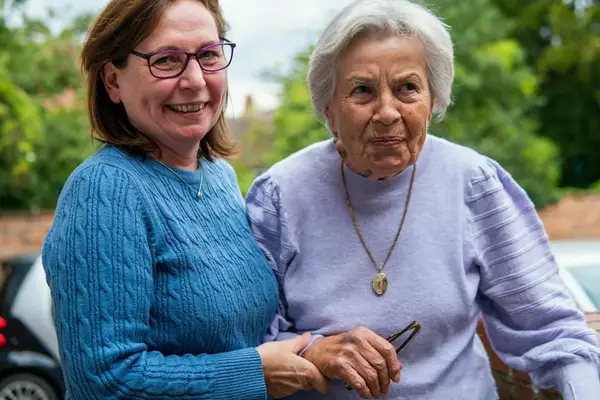
At Elder, we provide compassionate live-in Alzheimer’s care – matching your loved one with a professional carer who offers round-the-clock support at home.
See how personalised care transformed life for Penny and her mum.
Select from over 6,000 qualified carers
Care can begin in as little as 24 hours
We have organised care in every GB postcode
Costs on average 35% less than traditional services

With Alzheimer’s care, a live-in carer moves into your loved one’s home to provide 24-hour, one-to-one support. Every carer is experienced in dementia and Alzheimer’s, so they know how to adapt to changing needs with patience, empathy, and understanding.
Alzheimer’s can make familiar spaces feel confusing, but staying at home can reduce stress and anxiety. A dedicated carer offers:
Arranging Alzheimer’s care with Elder involves a clear and supportive process, typically completed in three simple steps:
Tell us your care requirements using our request form, including the type of care you’re looking for, any specialist skills you need, and what daily life looks like.
You’ll start receiving profiles of suitable self-employed carers within 24 hours. Chat to them online or arrange a phone or video call, before choosing who you like best.
Once your agreement with your carer begins, use your MyElder account to chat with them and the Elder team, manage your schedule and care information, and find respite cover if you need it.

Alzheimer's disease is a physical condition caused by the build-up of proteins (amyloid plaques and tangles) in the brain. This protein build-up gradually blocks the connections between nerve cells, causing them to die, which leads to a decline in brain function. It primarily affects the hippocampus, the area of the brain responsible for memory.
According to the UK Dementia Research Institute, in the UK, almost 1 million people live with dementia, with Alzheimer's accounting for 60-80% of all cases.
There is no single cause of Alzheimer’s. Instead, it develops due to a combination of genetic, lifestyle, and environmental factors, including:
Although there is currently no cure, early diagnosis and the right support – such as specialist Alzheimer’s care at home – can help slow progression and maintain quality of life.
Alzheimer’s disease progresses gradually, with each stage requiring different levels of care and support.

In the early stages, symptoms are mild and your loved one may still manage most daily tasks independently. However, this is a key time to plan for the future.
Common symptoms:
Helpful actions:

This stage brings a greater need for help with daily activities as memory and thinking decline.
Typical signs:
Care priorities:

In advanced Alzheimer’s, a person will require continuous care. Communication and mobility become very limited.
Care focus:
At Elder, our experienced carers provide sensitive, professional support through every stage of Alzheimer’s – helping families spend more meaningful time together, not just as carers. If your loved one is living with Alzheimer’s and you’re unsure where to begin, our Care Advisors are here to help.
Read more stories from families who have chosen live-in care for their loved ones living with dementia.


The cost of Alzheimer’s care varies depending on the type and level of support required. Residential care homes are often more expensive than live-in care, especially when nursing or specialist medical support is needed.
There are several funding options to help cover costs:
Understanding the options early can make planning care more manageable. Learn more about funding elderly care at home.
Still have questions?
0333 920 3648The two terms are often used interchangeably, but they aren’t the same.
If you’re unsure whether your loved one’s symptoms are due to Alzheimer’s, speak with their GP or a dementia specialist for assessment and advice.
Diagnosis usually involves a GP assessment, memory and cognitive tests, neurological exams, and sometimes brain scans (MRI or CT). Blood tests can rule out other conditions.
While rare early-onset forms are linked to specific gene mutations, most cases are not directly inherited. Having a parent or sibling with Alzheimer’s slightly increases risk.
Yes – with the right support, many people with Alzheimer’s continue living safely and happily at home. Live-in Alzheimer’s care helps maintain independence while ensuring professional assistance is always available.
The two main options are live-in care and residential dementia care homes. Live-in care provides one-to-one support in familiar surroundings, helping your loved one maintain routines, connections, and independence, often at a lower cost than residential care.
Residential homes offer 24-hour supervision and medical support, particularly for late-stage cases. However, many families prefer home-based care: for example, Kenn and Nicole were advised by dementia care specialists to keep their mother at home with tailored support, rather than move her into a care home. Read their full story to see how personalised care made a difference.
Charities like Age UK and the Alzheimer’s Society offer advice lines, support groups, and activities that help people stay connected and active.

Long-term 24-hour support

Temporary 24-hour support

Flexible home visits