

Skip to content

Carer breaks, cover and handover explained

With live-in care through Elder, your loved one has a main carer and a cover carer, so there’s always a familiar face at home. Here’s how they take turns, how handover works and what your carer’s daily break looks like.

Find a carer0333 920 3648
Woman opening the door of her house

How the carer rota works

Live-in care is full-time, and no one can care around the clock without rest. That’s why most families have two carers who take turns: a main carer (primary carer) who’s with your loved one most of the time, and a cover carer who steps in while the main carer takes time off.

Both are self-employed carers that you choose yourself from the carer applicants, so your loved one gets to know a small number of people rather than a stream of new faces.

At Elder, we don't set the rota. You and your carer agree the dates between yourselves, and we help with the practical side: finding cover, keeping your schedule up to date in MyElder and answering any questions on handover day.

Older couple reading from their tablet

How your main carer and cover carer alternate

    Older man spending time with his carer

    A typical rota

    Every rota is a little different, but most follow a similar pattern:

    • Your main carer stays for around four weeks at a time.
    • They then take a break of one to two weeks.
    • Your cover carer moves in for those weeks, so there’s always someone with your loved one.
    • Your main carer comes back, and the cycle starts again.

    Some carers prefer a different pattern, such as three weeks on and one week off or five weeks on and two weeks off. We recommend that you discuss this with your carer during the first week of care, and together you can agree what works for your loved one.


    Two women chatting in the living room

    Planning your carer’s breaks

    Your main carer agrees their break dates with you first, then books them in Elder Hub, the app carers use to manage their work. The dates then appear in your schedule in MyElder.

    Once the dates are in, we open a search for a cover carer. Carers who are free on those dates and have the right experience can apply, and you choose who you’d like in the same way you chose your main carer. Your Family Support Specialist can help you compare applications and set up calls.

    The earlier you agree on the dates, the more time there is to find the right person. It’s worth talking about breaks with your carer in the first week or two of care.

    Older woman walking with her carer

    Keeping the same cover carer

    Many families ask their cover carer back for each break, so your loved one sees the same two faces. We can’t always promise this, because cover carers are self-employed and choose their own work, but planning ahead gives you the best chance. If your cover carer can’t make a particular break, you’ll choose someone new in the same way.

    Woman helping her mum get out of the car

    If you’d rather cover a break yourself

    Some families like to spend the time with their loved one, or have another arrangement in place. Let us know as early as you can, and we’ll pause care for those dates.

Thinking about live-in care?

Speak to one of our Care Advisors about how a rota could work for your loved one, or explore live-in care options.

0333 920 3648Explore live-in care
Wendy and her carer Suleekha
8,000+ FAMILIES HELPED

Two familiar faces,
chosen by you

“Violet and Suleekha have both got to know Mum’s ways now and she has got to know them”.

- Wendy, Elder customer

Wendy moved her mum, Pam, from hourly visits to live-in care, with a main carer and a cover carer she chose herself.

“When Violet took a break, we found our respite carer, called Suleekha. She has been brilliant too”.

“They’re both such warm personalities and they’re always smiling and having fun with mum”.

Read more stories

How handover works

Handover is when one carer passes on everything they know about your loved one to the next. It happens in person, at your loved one’s home, every time carers change over.

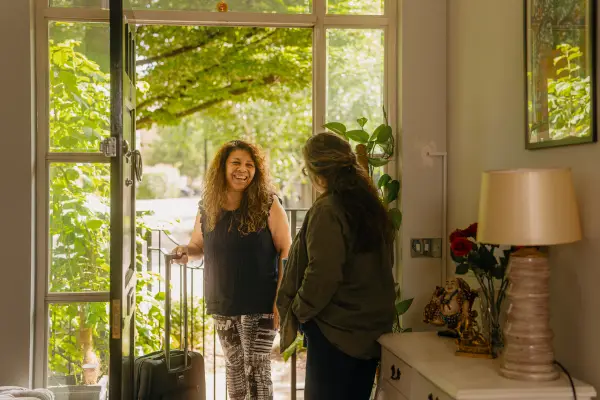
    Carer with suitcase meeting another carer

    What happens on handover day

    Both carers can see each other’s contact details in Elder Hub 48 hours before the changeover, so they can get in touch and plan ahead. On the day, the carer taking over (the incoming carer) usually arrives around 12:30pm. The carer going off for their break (the outgoing carer) stays until they’ve finished the handover, usually by about 2pm.

    Two women going through handover

    What carers go through at handover

    The outgoing carer shares the things a care profile can’t always capture, including:

    • Your loved one’s daily routine, from getting up to going to bed
    • Where medication is kept and when it’s taken
    • Meals, favourite foods and any dietary needs
    • Upcoming appointments, visitors and social plans
    • What your loved one enjoys, and anything that unsettles them
    • How the family likes to be involved
    • Practical details, like how the appliances work, which day the bins go out and where the fuse box is

    The outgoing carer also gets the home ready for the incoming carer, with fresh bedding in the carer’s room and enough food for the first day.

    Woman typing on her laptop with her older dad

    How you can help

    • Be there for part of the handover if you can, so you can introduce the new carer to your loved one.
    • Check that your loved one’s care appraisal in MyElder is up to date before each changeover, so the new carer has the full picture.
    • Let the outgoing carer know about anything coming up, such as appointments or family visits.

    For people living with dementia, a familiar routine and familiar faces can make change easier. Our advice for living well with dementia includes tips on keeping a regular routine, and you can find out more about live-in dementia care with Elder.

    Older woman chatting with her carer while having a cup of tea

    Longer handovers

    If your loved one’s needs are complex, or they find change hard, you can ask for a 24-hour handover. Both carers stay with your loved one for the day, and you pay for both carers for that day. Talk to your Family Support Specialist if you’d like to arrange one.

If a carer is unwell or can’t make it

Sometimes illness or a family emergency means a carer can’t start as planned, or has to leave earlier than expected. If that happens, we’ll move quickly to help you find someone new.

Let us know straight away

If your carer tells you they can’t make it, contact your Family Support Specialist as soon as you can. The earlier we know, the more time there is to find the right person. Carers also let us know directly, so we may be in touch with you first.

Woman speaking on the phone

How we help you find cover

  • We reopen your search, so carers who are free on those dates and have the right experience can apply.
  • If time is short, we contact carers directly to check their availability, including carers who’ve worked with your loved one before.
  • If an incoming carer is unwell, the carer who’s already with your loved one may be able to stay on for a few more days.
  • You still choose who comes. We’ll share carers’ profiles with you, and you can speak to them before you decide.
Older man looking at phone with his grandson

Having a back-up plan

We always work hard to find cover quickly, but we can’t guarantee a carer at very short notice. It helps to have a back-up plan, such as a family member or friend who could step in for a day or two. If your family can cover for longer, we can pause care for those dates.

Woman spending time in the kitchen with her older mum

What your carer’s daily break looks like

Live-in carers support your loved one throughout the day and are on hand at night, so they need time to rest. Each day, your carer takes a two-hour break. It’s part of every live-in care arrangement, and your weekly price already allows for it.

When the break happens

Elder doesn’t set break times. You, your loved one and the carer agree what works best, and you can change it as you get to know each other. The two hours don’t have to be in one go. For example, some families choose:

  • An hour in the morning and an hour in the afternoon
  • Two hours in the early afternoon, while your loved one has a rest
  • A break while family or friends visit
  • Sometimes the carer will have a four-hour break every two days instead

Agree the times in the first day or two and make a note of them, so everyone knows what to expect. During their break, your carer might go for a walk, pop to the shops or relax in their room.

Woman kissing her mum

If your loved one can’t be left alone

Many people are happy on their own for a couple of hours. If your loved one isn’t, someone will need to be with them during the break, such as a family member, a friend or a neighbour.

If that’s not possible, some families book a local visiting carer for those hours. In areas where there are lots of local carers, we may be able to help you find someone who can come in for two-hour stints.

Your Care Advisor will talk through how the break will be covered before care begins. Add your plan to your care appraisal too, so your carer knows what to expect from day one.

Older woman with her carer in the kitchen

Rest at night

Your carer sleeps at night too. Up to two wake-ups a night are included, for things like helping your loved one to the bathroom. If your loved one needs more help at night, we’ll talk through other options with you, such as overnight care.

Woman spending time in the kitchen with her older mum

Who to talk to once care begins

Once care begins, your Family Support Specialist is your main contact at Elder, seven days a week. They can help you plan breaks, choose a cover carer and sort out anything that comes up on handover day. You can reach them through chat in MyElder, by email or by phone.

0333 920 3648

Frequently asked questions

0333 920 3648