For Families
For CarersSign in
0333 920 3648

Lines are open

Elderly care for your loved one

Elderly care helps your loved one stay independent for longer with tailored support from a dedicated carer. Discover how Elder can help today.

Find a carerCall us

Elderly man having a cup of tea with his carer
  • 6,000+ Carers

    Select from over 6,000 qualified carers

  • Fast matching

    Care can begin in as little as 24 hours

  • Across Great Britain

    We have organised care in every GB postcode

  • Cost efficient

    Costs on average 35% less than traditional services

elderly man with his carer

What is elderly care?

Elderly care, also known as elder care, is professional support that helps older adults live safely, comfortably, and independently in their own homes for as long as possible.

Elderly care gives you peace of mind that your loved one is receiving personalised support tailored to their daily needs.

This type of care can include:

  • Help with personal care, such as washing, dressing, and toileting
  • Support with mobility and administering medication
  • Light housekeeping and meal preparation
  • Meaningful companionship to reduce loneliness

Unlike moving into a care home, elderly care at home allows your loved one to stay in familiar surroundings, supported by a carefully matched carer who truly understands their needs.


Carer helping elderly woman with walking

Who can benefit from elderly care services?

Elderly care services are ideal for older adults who are starting to struggle with daily tasks due to age-related challenges, whether that’s limited mobility, ongoing medical conditions, memory loss, or increased feelings of isolation.

Your loved one might benefit from professional care if they’re living with conditions such as dementia, Parkinson’s Disease, arthritis, or recovering from surgery. Even if they’re just finding it harder to manage personal care, cook meals, or safely get around the house, having a dedicated carer can make a meaningful difference to their quality of life.

Elderly woman holding her carer's hand

When is the right time to seek elderly care?

It’s not always easy to know exactly when to step in but often, small changes in your loved one’s routine can signal it’s time to consider support. You might ask yourself:

  • Can they navigate the house safely without falling or getting confused?
  • Can they go out alone for appointments or shopping?
  • Are they able to cook their own meals regularly?
  • Do they stay properly nourished and hydrated?
  • Can they hear the phone or doorbell clearly?
  • Is their living space clean, safe, and well-maintained?
  • Are they managing personal hygiene on their own?
  • Are they experiencing frequent lapses in memory or confusion?
  • Do they have regular social contact, or are they becoming isolated?

If you’re noticing a pattern of “no” answers, now may be the right time to explore elderly care options. We know these conversations aren’t easy – that’s why we’ve created a helpful webinar with our top tips on how to start the conversation about home care.

Our elderly care services

Live-in care

  • A carer lives in the home to provide round-the-clock support
  • Suitable for people living with conditions like dementia, reduced mobility, etc.
  • For long-term care needs

Respite care

  • A carer moves in for a few days to provide round-the-clock support
  • Suitable to cover for a main caregiver or for a temporary increase in care needs
  • Minimum duration of 3 days

Visiting care

  • Book as many hours as you need for help in the comfort of your home
  • Support with everyday tasks like grooming, walks, cooking, etc.
  • From as little as 1 hour per week

Overnight care

  • A carer stays through the night to provide support and reassurance
  • Suitable for those needing help overnight or monitoring for safety
  • Choose from a sleeping or waking night carer depending on your needs

Palliative care

  • Compassionate care focused on comfort and dignity for those with serious illness
  • Suitable for people with life-limiting conditions who wish to stay at home
  • Care tailored to changing needs throughout the palliative stage

Other types of elderly care services

At Elder, we focus on home care solutions, but it’s useful to understand the full spectrum of elderly care options. Depending on your loved one’s health and support needs, care homes, nursing homes, assisted living, or hospice care might be appropriate alternatives that provide care outside the home.

  • Two elderly people in a care home

    Care homes for the elderly

    Care homes support older adults who can’t live independently.

    Pros

    • 24/7 supervision and support
    • Social activities and onsite facilities
    • Predictable, structured routines

    Cons

    • Adjustment to a new environment
    • Less one-to-one care
    • Reduced privacy and independence
  • Nurse with elderly woman

    Nursing homes for the elderly
    Nursing homes support people with complex or ongoing medical needs.

    Pros

    • 24/7 professional nursing care
    • Meals, accommodation, and full daily support
    • Possible council or NHS funding

    Cons

    • Difficult transition from home
    • Limited autonomy and privacy
    • High costs if not eligible for funding
  • Elderly man on the phone

    Elderly assisted living
    Assisted living provides a balance between independence and support.

    Pros

    • Staff available around the clock
    • Greater independence and privacy
    • Built-in community and social opportunities

    Cons

    • Cost and availability vary
    • Not suitable for complex medical needs
    • Moving home can be challenging
  • Two elderly women in a hospice

    Hospice care
    Hospice care supports people with terminal or life-limiting illnesses.

    Pros

    • Free, specialist care and support
    • Access to a full team of medical and therapeutic professionals

    Cons

    • Some people may prefer to remain at home rather than in a hospice
One of our care advisors

How do I get started with elderly care?

Arranging care for a loved one can feel overwhelming, but we’re here to guide you through it.

Here are a few key steps to help you get started:

  • Request a care needs assessment from your local council to understand the level of support required.
  • Check if you’re eligible for funding to help cover the cost of care.
  • Explore the type of care that best fits your loved one’s needs. Our no-obligation care profile is a helpful first step in understanding your options.

Need help? Our team is always on hand to talk you through the process.

Customer stories: Finding trusted live-in care

Finding the right care can feel overwhelming, but hearing how others made the decision can help. Explore real stories of families who found trusted support through live-in care.

  • Jean and John with their family

    Live-in care vs care home: Kenn and Nicole’s story

    Kenn and Nicole share how live-in care allowed their parents to stay safe and happy in their own home, avoiding the stress of a care home.

  • Sheila on her daily walk

    How home care gave Sharon peace of mind

    Sharon shares how home care supported her mum Sheila and gave her peace of mind knowing her mum was cared for and never alone.

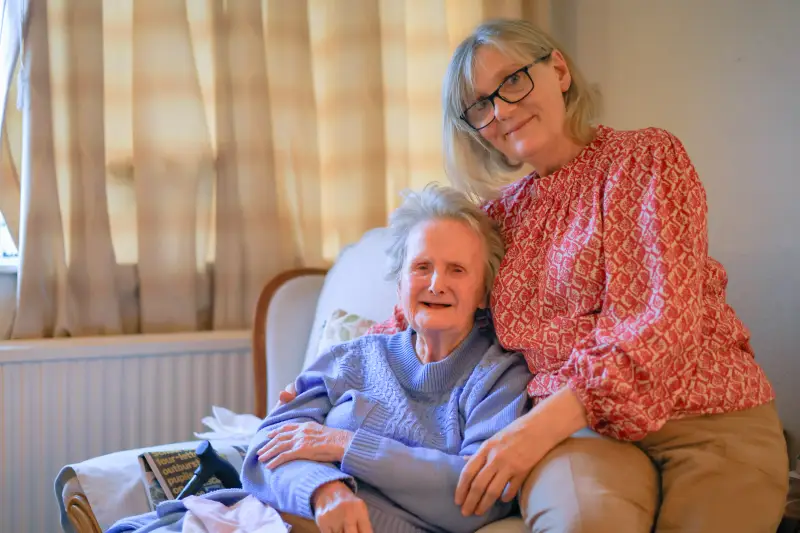
  • Hayley and her dad sitting on the sofa

    How live-in care allowed Hayley's dad to remain at home

    Hayley shares how live-in care gave her dad tailored support, enabling him to regain his independence after being discharged from hospital.

FAQs

Still have questions?

0333 920 3648

Elderly care in the UK is generally divided into two main types: home care and residential care.

Home care allows older adults to remain in their own home while receiving personalised support. This includes live-in care, visiting care, respite care, overnight care, and palliative care.

Residential care involves moving into a dedicated facility and includes care homes, nursing homes, assisted living, and hospice care.

The right option will depend on your loved one’s individual needs, health, and lifestyle preferences.

If your loved one is struggling with daily tasks, forgetting things often, missing medication, or becoming isolated, it may be time to consider care. Signs like mobility issues or poor personal hygiene can also indicate they need support. A care needs assessment from your local council can help you understand what level of care is right.

Elderly care at home offers many advantages over care homes for those who value independence and comfort. It allows your loved one to stay in familiar surroundings, maintain their routine, and receive one-to-one support from a dedicated carer. While care homes provide 24/7 staff support and social opportunities, they often involve adapting to a new environment and shared care. Caring for the elderly at home is often more personalised and flexible.

The cost of elderly home care varies depending on the level of support required, location, and whether care is hourly or live-in. With Elder, hourly care starts from £30, while live-in care starts from £1,150 per week (£165 per day). What’s more, you won’t be charged extra for weekends, public holidays or joining fees.

Yes, elderly care can be arranged quickly in urgent situations, such as hospital discharge or sudden illness.

At Elder, we specialise in fast, reliable care placements and can often arrange emergency home care within 24 to 48 hours. Our team works with families to understand their needs and match them with an experienced carer as quickly as possible, ensuring continuity and peace of mind.

Arranging care with Elder is simple and can be done in three easy steps:

  1. Share your care needs

Fill out our online care request form with details about the type of care you’re looking for, any specialist support needed, and your loved one’s daily routine.

  1. Choose your carer

Within 24 hours, you’ll receive profiles of experienced self-employed carers. You can message them, or arrange a phone or video call before making your choice.

  1. Manage everything online

Once care begins, you can use your MyElder account to communicate with your carer and the Elder team, update care arrangements, and request respite cover if needed.