
Legal
Local authority funding for care in your own home
Earl Estologa | Editorial Contributor
14-minute read | 29/10/2026


If you're helping your older parent with their finances, working out which benefits they can claim isn't always simple. Each benefit has its own rules, and many families miss out on support because they don't know it's there.
This guide covers the main benefits for pensioners in the UK, with the 2026/27 rates that apply from April 2026. You'll find out who qualifies, how claiming one benefit can open the door to others, and how you can help your parent apply.
Depending on your parent’s age, health, income and living situation, they may be able to claim one or more of the following benefits. Rates rose on 6 April 2026, and these are the main rates for 2026/27 from the Department for Work and Pensions (DWP) benefit and pension rates 2026 to 2027.
| Benefit | 2026/27 rate | Means-tested? | |
|---|---|---|---|
Attendance Allowance (lower rate) | £76.70 a week | No | |
Attendance Allowance (higher rate) | £114.60 a week | No | |
Carer’s Allowance | £86.45 a week | No, but you must earn £204 a week or less | |
Pension Credit (single person) | Tops up income to £238.00 a week | Yes | |
Pension Credit (couple) | Tops up income to £363.25 a week | Yes | |
Full new State Pension | £241.30 a week | No | |
Full basic State Pension | £184.90 a week | No | |
Winter Fuel Payment | £100 to £300 for winter 2026 to 2027 | No, but HMRC takes it back if income is over £35,000 | |
Cold Weather Payment | £25 for each seven-day period of very cold weather | Paid with certain means-tested benefits | |
Council Tax Reduction | Set by your parent’s local council | Yes |
If your parent lives in Scotland, some of these benefits are run by Social Security Scotland instead. Pension Age Disability Payment replaces Attendance Allowance, and Carer Support Payment replaces Carer's Allowance. The rules are similar, but you apply in a different way.
Many pensioners qualify for more than one benefit, and claiming one can make your parent eligible for others. A free benefits check from Age UK is a good place to start.

Attendance Allowance is a tax-free benefit for people over State Pension age who need help with personal care or supervision because of a long-term condition or disability.
It isn't means-tested, so your parent's income and savings don't affect it. They also don't need to have a carer already to qualify.
Your parent may be able to get Attendance Allowance if they:
There are two weekly rates, depending on how much help your parent needs:
You don't need to choose the rate yourself. The DWP decides based on the information you give on the form. You can read more in GOV.UK's guide to Attendance Allowance.
Yes, and often in a good way. Getting Attendance Allowance can increase your parent's:
Your parent can't get Attendance Allowance if they already get Disability Living Allowance (DLA) or Personal Independence Payment (PIP).
Your parent can apply online through GOV.UK, or by filling in the AA1 claim form. You can order a paper form from the Attendance Allowance helpline on 0800 731 0122.
Before you start, it helps to have:
Keeping a short diary of your parent's care needs for a week or two makes the form much easier to fill in. You can complete it with them, or on their behalf with their permission.
Many families put Attendance Allowance towards support at home. If your parent needs more help day to day, you can explore live-in care options with Elder.

Carer's Allowance is a weekly payment for people who spend at least 35 hours a week caring for someone with substantial care needs, including an older parent.
You may qualify if you:
Your parent also needs to get a qualifying benefit, such as Attendance Allowance, the daily living part of PIP, or the middle or highest care rate of DLA. In Scotland, you'd apply for Carer Support Payment instead.
Carer's Allowance is £86.45 a week. It counts as taxable income. You can read more in GOV.UK's guide to Carer's Allowance.
It can, especially means-tested benefits. If you get the State Pension or another overlapping benefit, you may not be paid Carer's Allowance at all.
It's still usually worth applying. You could get an underlying entitlement, which can add a carer amount of £48.15 a week to means-tested benefits such as Pension Credit. GOV.UK explains how Carer's Allowance affects other benefits.
It won't affect your parent's State Pension or disability benefits, such as Attendance Allowance.
But if your parent gets the severe disability addition in Pension Credit, they'll lose it if you're paid Carer's Allowance for looking after them. That addition is worth £86.05 a week, so check the overall impact before you apply. Carers UK and Age UK can help you work this out.
You can apply online through GOV.UK. Before you start, have these details ready:
Some questions feel detailed, but the form itself is quick to complete.

Pension Credit tops up your parent's income if they're over State Pension age and on a low income. It has two parts:
Guarantee Credit tops up your parent's weekly income to:
They could get more on top of this if they:
Savings Credit is worth up to £17.96 a week for a single person, or £20.10 for a couple.
Your parent's eligibility depends on their income, which includes:
Even if your parent's income is a little over the threshold, they could still qualify if they have a disability, care for someone, or have housing costs. It's worth checking with the Pension Credit calculator.
Pension Credit can open the door to other help, including:
For many families, this extra support is worth more than the Pension Credit payment itself.
Your parent can apply online through GOV.UK, or by calling the Pension Credit claim line on 0800 99 1234. Claims can usually be backdated by up to three months. GOV.UK explains how to claim Pension Credit.
Council Tax Reduction helps people on lower incomes, including pensioners, pay their council tax. It's sometimes called council tax support. Keeping bills manageable can make a real difference to your parent staying in their own home.
Your parent may be eligible if they:
In some cases, your parent won't have to pay council tax at all.
If your parent has a severe mental impairment, such as dementia, they may qualify for a separate council tax discount or exemption. A doctor has to confirm the impairment, and your parent needs a qualifying benefit such as Attendance Allowance.
If your parent gets the Guarantee Credit part of Pension Credit, they'll usually get the maximum Council Tax Reduction, which often means they pay nothing. If they get Savings Credit only, they may still get a discount, depending on their income and savings.
Each council runs its own scheme. The reduction might be a percentage of the bill, a fixed amount, or the whole bill. You can apply for Council Tax Reduction through your parent's local council.

The Winter Fuel Payment is a yearly, tax-free payment to help older people with heating costs over winter.
Your parent can get a Winter Fuel Payment for winter 2026 to 2027 if they were born on or before 27 June 1960 and usually live in England or Wales. Their circumstances during the qualifying week of 21 to 27 September 2026 decide whether they get it and how much.
In Scotland, the Pension Age Winter Heating Payment replaces it. Northern Ireland has its own scheme.
Your parent could get between £100 and £300, depending on their age, who they live with and whether they get certain benefits. Households with someone born before 28 September 1946 get the highest amount. You can check how much your parent could get.
If your parent's total taxable income is over £35,000 a year, they'll still get the payment, but HMRC will take it back. It usually does this by changing their tax code or adding it to their Self Assessment tax return. Age UK's Winter Fuel Payment guide explains how this works.
Most people get the payment automatically, usually in November or December. Your parent will get a letter in October or November saying how much they’ll get.
If your parent has never had a Winter Fuel Payment before, or doesn't get the State Pension, they may need to claim. Claims for winter 2026 to 2027 opened on 21 September 2026, and your parent needs to make a claim before 31 March 2027. They’ll need to provide their National Insurance number and bank details.
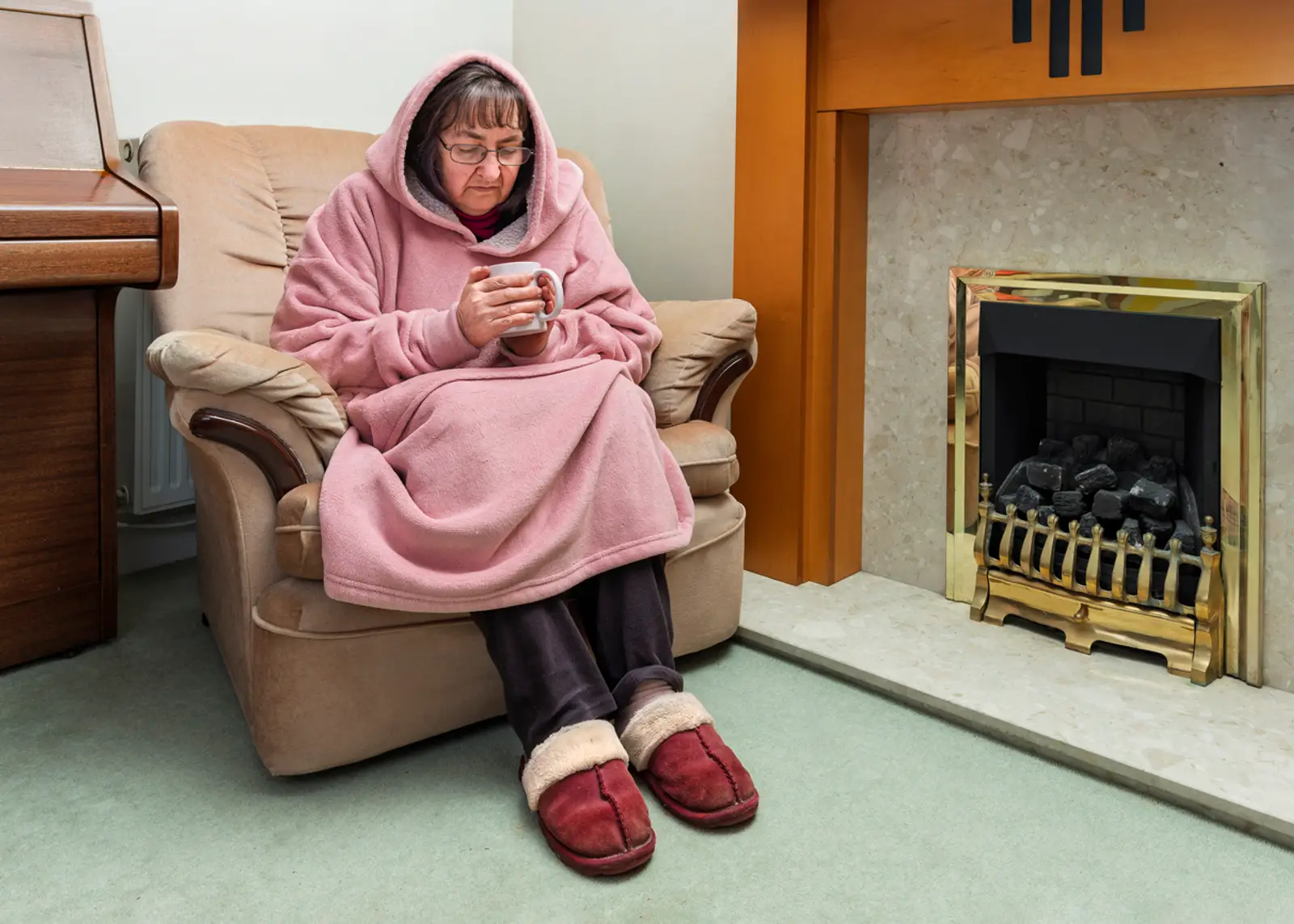
Cold Weather Payments give extra support when the temperature in your parent's area is recorded or forecast to be zero degrees or below for seven days in a row.
Your parent may get Cold Weather Payments if they get:
Cold Weather Payments aren't available in Scotland, where the Winter Heating Payment is paid instead.
Your parent will get £25 for each seven-day period of very cold weather between 1 November 2026 and 31 March 2027.
Your parent doesn't need to apply. Payments go into the same account as their benefits, usually within 14 working days of a cold spell. You can check whether a payment is due with the Cold Weather Payment postcode checker.
Most benefits don't change when your parent turns 70 or 80, but a few do:
Some support starts earlier and carries on in later life. In England, your parent can get free NHS prescriptions and free NHS eye tests from 60, and a free bus pass from State Pension age. Prescriptions are free for everyone in Scotland and Wales.
Non-means-tested benefits don't depend on your parent's income or savings. For pensioners, these include:
Pension Credit, Housing Benefit and Council Tax Reduction are all means-tested, so your parent's income and savings affect what they get.
We've spoken to experts across health and social care about financial support in later life. Find out how you can access the funding and benefits your parent is entitled to.
Supporting an elderly parent often means making complex financial decisions. Elder’s Care Advisors help families every day to understand benefits, funding, and care options.
For more information, read our guide to paying for care at home or speak with one of our Care Advisors.
0333 920 3648Elder is an introductory agency and therefore does not direct, control, monitor or oversee the ongoing delivery of care. This article is for general information only and is not a substitute for professional advice, which should be sought when appropriate.
Earl Estologa | Editorial Contributor

Zenya Smith | Editorial Contributor

Zenya Smith | Editorial Contributor

Zenya Smith | Editorial Contributor
Zenya Smith | Editorial Contributor

Zenya Smith | Editorial Contributor