DAVID AND HIS LOVED ONE
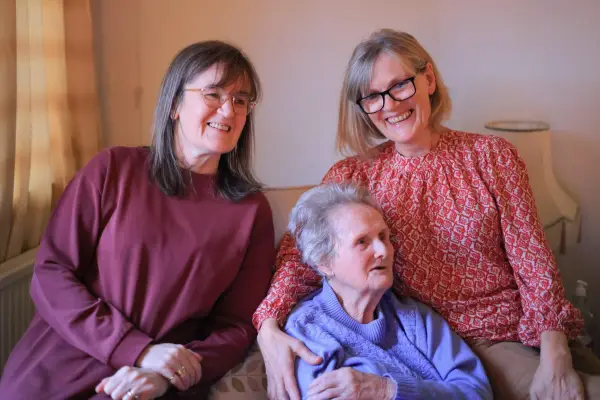
“Susan, who's the carer currently, she's been absolutely brilliant. She's like part of the family”.
24-hour care means your loved one has support throughout the day and night, helping them stay safe and comfortable at home. At Elder, we help arrange this through live-in care or a two-carer plan where continuous overnight support is needed.
Find a carer0333 920 3648

24-hour care at home means having a carer based in your loved one's home and available to provide support throughout the day and night. It's sometimes used to describe live-in care, where a carer lives in the home and provides daytime support, with overnight availability for occasional needs.
Live-in carers introduced through Elder work on a rotation so they can get proper rest and time off while maintaining consistent support for your loved one. They can help with personal care, mobility, medication reminders, meals, household routines and companionship.
For people who need active or frequent support during the night, a second carer may be more appropriate. Two carers can work shifts to provide continuous support day and night, including when your loved one needs regular assistance while awake overnight.
With Elder, 24-hour care at home is usually arranged as live-in care. A carer lives in your loved one's home and provides support throughout the day, working as part of a rotation so they have proper rest and time off.
For many families, this provides the reassurance they need: a familiar carer is there to help with morning routines, personal care, meals, medication reminders, mobility and companionship, while also being available if your loved one needs occasional help during the night.
Some people need more intensive support than a single live-in carer can safely provide. This can include frequent night-time assistance, active supervision while awake overnight or complex care needs. In these situations, two or more carers can work shifts to provide continuous care throughout the day and night.
We'll discuss your loved one's needs during a care needs assessment and help you understand which type of care is most appropriate.
Arrange 24-hour care
Before arranging 24-hour care at home, it’s important to understand the level of support needed. A care needs assessment helps determine whether round-the-clock support is the right option.
You can request a care needs assessment through your local authority, your GP, or the hospital discharge team if your loved one is currently in hospital.
The assessment considers:
24-hour care is often recommended for people living with degenerative conditions such as Alzheimer’s or Multiple Sclerosis, especially in later stages. These conditions can make daily tasks more difficult and may lead to sleep disturbances, confusion, or a risk of falls and wandering at night.
In these cases, a personalised care plan ensures the right level of support is in place, providing comfort, safety, and peace of mind.

24-hour home care offers a unique blend of personalised support, independence, and peace of mind. Unlike residential care, it allows individuals to stay in familiar surroundings, helping to maintain routines and reduce confusion or distress, especially for those living with dementia or progressive conditions.
Remaining at home supports emotional wellbeing, especially for older people or those with memory loss. Familiar sights, routines, and personal belongings can help reduce anxiety, confusion, and behaviours like sundowning.
With 24-hour care, there's always someone in the home to provide support when it's needed. Carers can help with personal care, medication, mobility, meals and daily routines, while providing a reassuring presence for both your loved one and your family.
Around-the-clock care helps lower the risk of falls, infections, and missed medication. It ensures better hydration, nutrition, and hygiene – key to maintaining overall health and preventing hospital admissions.
Care plans are completely bespoke, built around the individual’s medical needs, lifestyle, and preferences. Carers are carefully matched not only by skills, but by personality, whether that means sharing a language, preparing favourite meals, or offering companionship.
24-hour home care promotes supported independence. It allows people to continue living life on their terms, with the safety net of dedicated, compassionate care, and gives families peace of mind that help is always at hand.
The cost of 24-hour home care in the UK depends on your loved one's individual needs, the level of support required and whether a second carer is needed for continuous night-time care.
Most live-in care packages for one person typically cost between £1,200 and £1,500 a week. With Elder, prices start from around £1,150 a week, with tailored quotes available for couples who want to stay together at home.
For a full breakdown of what affects the price, see our guide to how much live-in care costs.
Financial assistance may be available through benefits such as Attendance Allowance, Pension Credit, Carer's Allowance and Personal Independence Payment.
Your local authority may also offer direct payments to help cover care costs, depending on your loved one's needs and assessment.
In some cases, NHS Continuing Healthcare may cover the full cost of 24-hour care at home.
To find out whether your loved one may be eligible, speak to their GP and ask about an NHS Continuing Healthcare checklist.
For more information, read our guide to funding care for older people.
Arranging 24-hour care at home with Elder involves a clear and supportive process, typically completed in three simple steps:
Tell us your care requirements using our request form, including the type of care you’re looking for, any specialist skills you need, and what daily life looks like.
You’ll start receiving profiles of suitable self-employed carers within 24 hours. Chat to them online or arrange a phone or video call, before choosing who you like best.
Once your agreement with your carer begins, use your MyElder account to chat with them and the Elder team, manage your schedule and care information, and find respite cover if you need it.
Every arrangement is different. Here are some of the families whose lives have changed since finding care through Elder.
DAVID AND HIS LOVED ONE
“Susan, who's the carer currently, she's been absolutely brilliant. She's like part of the family”.
HAYLEY AND HER DAD, COLIN
“He was quite a sort of avid walker before all this happened. I knew that was important to him, but it was Norman really who helped him get back on his feet in the park”.
MIKE AND HIS DAD
“It's only when you get them into your home, do you realise the value of what a carer can bring”.
At Elder, we provide a full range of home care services to suit every need. If your loved one requires occasional support or your primary carer needs a temporary break, these options may be more suitable:

Temporary 24-hour support
Flexible home visits

Ready to find out more? These guides walk you through finding the right carer, what their day-to-day role looks like, and how to prepare your home and family for live-in care.
How to find the right live-in carer