
Dementia Care
Dementia and sundowning – advice for caregivers
Zenya Smith | Editorial Contributor
9-minute read | 24/09/2026



Someone you love insists nothing is wrong. They forget the same conversation four times, then get angry when you bring it up. They deny they've had a fall, or refuse a carer they clearly need. This isn't stubbornness. It's often a symptom called anosognosia, and it's far more common than most families realise.
In this guide, we'll explain what causes it, how to recognise it, and how to support someone who has it, including what to do when it leads to false dementia accusations.
Anosognosia is a brain-based inability to recognise your own illness or impairment, a genuine lack of awareness rather than a choice. The word comes from Greek and roughly means "without knowledge of disease". It's common in dementia, and can also happen after a stroke.
It's easy to confuse anosognosia with denial, but they're not the same thing. Denial is a conscious choice to avoid an unwelcome truth. Anosognosia is different. It happens because the parts of the brain responsible for self-awareness are themselves damaged, so the person genuinely doesn't know anything has changed. No amount of evidence or explanation can break through it on its own.
This matters for how you respond. Arguing with someone who has anosognosia rarely works, because you're not up against stubbornness. You're up against a brain that can't process the deficit at all.
Anosognosia happens when illness or injury damages the areas of the brain that build our sense of self, particularly the frontal and parietal lobes and the right hemisphere. Researchers at the University of Bordeaux have linked it to a breakdown in the brain's error-monitoring system, the internal process that would normally flag when something's wrong.
Anosognosia is common in Alzheimer's disease and other forms of dementia. It tends to become more pronounced as the condition progresses through the 7 stages of dementia. That said, some awareness can come and go even in the earlier stages.
It's also one of the reasons why a loved one might seem to change quickly, then improve again. Not every sudden shift is the dementia itself getting worse. Infections, medication changes, and even disrupted routines can all cause a temporary decline. Our guide to sudden worsening of dementia symptoms explains what else could be going on.
After a stroke, anosognosia often appears alongside physical symptoms like paralysis on the side of the body. Someone may insist they can move a limb that clearly isn't working, or deny any weakness at all. This is most strongly linked to damage in the right side of the brain, and it can significantly slow rehabilitation if it isn't recognised and worked with early on.
Unlike dementia, where anosognosia usually builds gradually, awareness after a stroke can sometimes improve over weeks or months as the brain recovers.
Anosognosia can be selective or complete, and it often varies from day to day. You might notice:
These aren't attempts to manipulate or deceive you. To the person experiencing it, everything genuinely feels normal.
Living alongside someone with anosognosia is exhausting in a particular way. You can see the risk clearly (the unlocked door, the missed medication, the unsafe driving) while the person you love insists there's nothing to worry about. That gap between what you see and what they believe can leave you feeling unheard, second-guessed, or like the difficult one in the relationship.
It can also, understandably, bring guilt. Family members often wonder if they're overreacting, or feel disloyal for pushing an assessment or a carer on someone who seems adamant they're fine.
Sometimes that gap between what you see and what they believe doesn't stay quiet. It turns into something else dementia often brings: a false dementia accusation.

False dementia accusations happen when someone with dementia genuinely believes something untrue. It's usually a way of making sense of confusion caused by the condition itself. If they can't find their glasses, "someone must have taken them" can feel more plausible to them than "I've misplaced them again". The accusation isn't a lie in the way we'd normally mean it. To them, it's the only explanation that fits what they're experiencing.
These accusations, like being accused of taking money, hiding belongings, or lying about a diagnosis altogether, are one of the more painful parts of caring for someone with dementia. It's a common enough question that it's worth addressing directly.
A few things tend to help:
You can't reason someone out of anosognosia, but there's a lot you can do to keep them safe and reduce friction at home.
Instead of "you can't remember to take your tablets", try "let's set up a pill box together so neither of us has to keep track". Framing support as practical rather than a correction tends to be better received.
You don't need someone to accept they have dementia to accept a stairgate, a key safe, or someone popping in to help. Introduce support gradually, and frame it around convenience or company rather than decline.
A memory clinic or stroke rehabilitation team can assess capacity and awareness properly, and can sometimes suggest strategies a family member alone can't. It's also worth planning ahead while capacity allows, including a lasting power of attorney, which our guide to early signs of dementia covers in more detail.
Round-the-clock help, such as live-in care, can take the pressure off having to manage every safety concern alone. Meanwhile, dementia care tailored to your loved one's needs adds routine and familiarity that can ease some of the confusion behind anosognosia.
Supporting someone who won't acknowledge they need help is draining. Our guide to advice for living well with dementia has practical suggestions for you and your affected loved one.
Speak to a GP if:
A GP can refer to a memory clinic, a stroke rehabilitation team, or a neuropsychologist, depending on the underlying cause. Charities like the Alzheimer's Society and the Stroke Association also offer free helplines and can talk through anosognosia specifically.
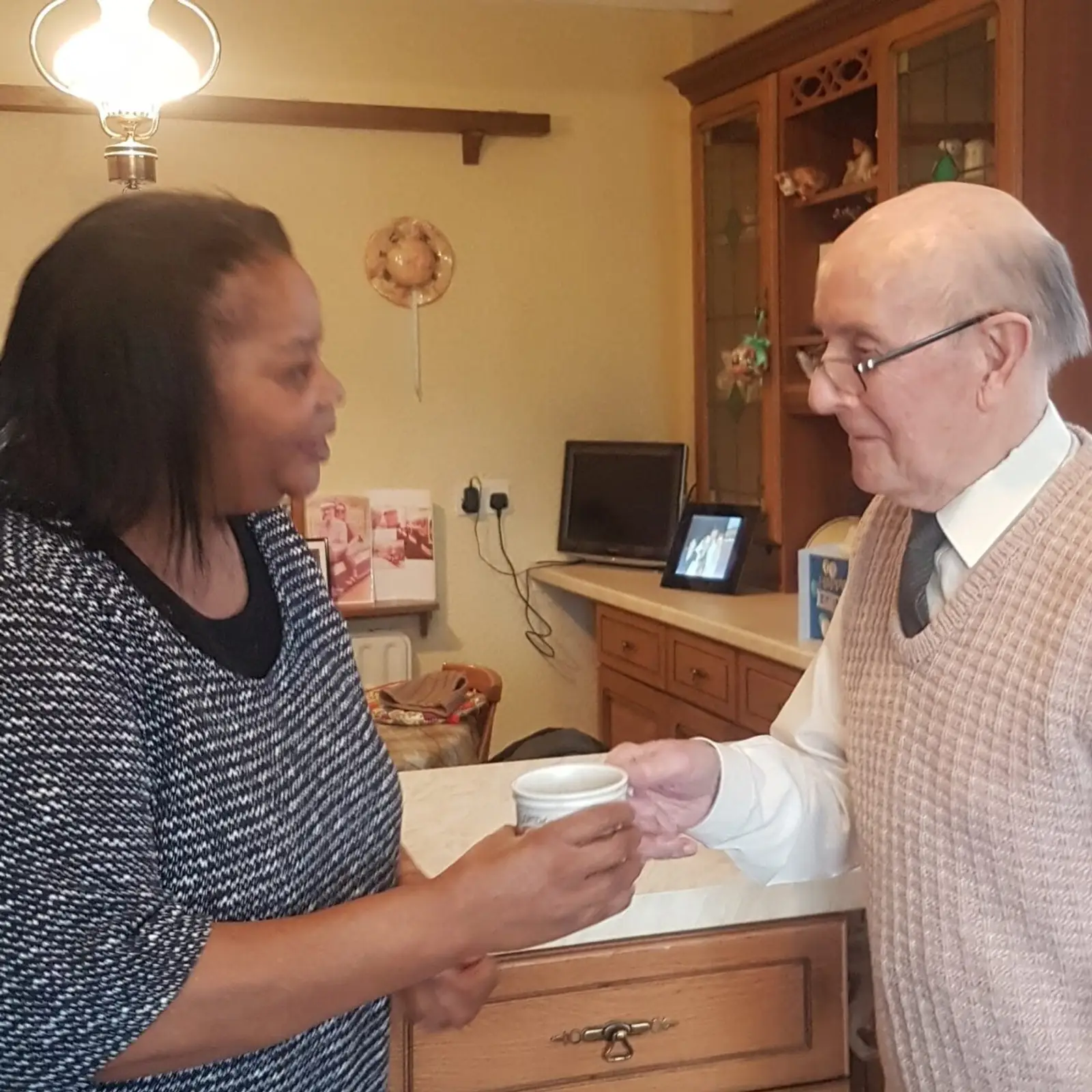
Linda's dad, Raymond, had always been an independent, capable man. When his family started noticing him misplacing things and leaving the front door unlocked overnight, he didn't raise it himself. "He would not speak up for himself if he needed help", Linda says.
Raymond's family never considered a care home, partly because they knew he wouldn't advocate for his own needs in that kind of environment. Instead, they arranged live-in care, which let him stay independent in his own home while keeping him safe.
For families dealing with anosognosia, Linda's story is a familiar one: the person you love may not recognise, or mention, the changes you can see clearly. Getting support in place doesn't depend on them agreeing there's a problem first.
Every family's experience of anosognosia is different, and there's no substitute for support that understands what you're going through.
If it would help to talk it through, one of our care advisors is here to listen and help you find the right next step.
0333 920 3648Zenya Smith | Editorial Contributor
Zenya Smith | Editorial Contributor

Earl Estologa | Editorial Contributor

Zenya Smith | Editorial Contributor

Zenya Smith | Editorial Contributor

Paola Labib | Editorial Contributor