Help with meals for elderly
8-minute read | 18/10/2024

Editorial Contributor

> How to help a loved one at meal times
> How a home carer can help
> Using meal delivery services
Why might older people need help at meal times?
Finding the time and energy to prepare and eat balanced meals becomes increasingly difficult as we get older. Some of us may pick up poor eating habits during our working lives – skipping lunch and snacking when we're too busy to stop, or getting home late and opting for a ready meal over cooking. These habits can be hard to shake.
However, in later life existing bad food habits can be exacerbated by a number of factors or situations – that can make eating a balanced diet feel more like a chore than a joy. For one thing our appetites often naturally reduce as we get older, and this can be in addition to –
- Worries about getting sick from certain foods if you have a weakened immune system
- Conditions like dementia which can make it harder to remember to eat
- Sensory changes may make certain tastes or textures unpleasant
- Needing to eat soft foods due to dental or swallowing issues
- Physical changes that make cooking and preparing food difficult or unsafe
- Losing a spouse or partner who took care of all meal preparation and cooking
- Feeling lonely or depressed which can impact the motivation to eat
Dad needed some company, someone to help him cook and act as a housekeeper, rather than someone 'fussing over' him all day. [Our carer] cooks Dad wonderful meals, is getting him out of the house and more active and has him laughing again.
How to help an older loved one at meal times
Food should be one of life’s pleasures, and is key to helping us be happier and healthier. if you're worried about a loved one's eating habits, there are a few things you can try to make eating a more enjoyable experience.
Batch cooking
If your loved one is finding cooking difficult you could try offering to cook a few meals for them that they can store in the freezer and heat up at meal times. This can also help to reduce their reliance on shop-bought ready meals and reduce food waste.
The easiest way to do this for a lower cost per meal is to make larger portions of your own meals, although you may need to make some changes to the ingredients you use if your loved one is on a special diet. When meal planning, be sure to ask them if there are any foods they don't like, or any particular meals they're craving – you could even use it as an opportunity to discover or recreate an old family recipe.
Stews and soups are a good way to soften meat and vegetables for those who find chewing difficult. Eating Well has a wide variety of health recipes that only require one cooking pot.
Tray-bakes and lasagnes can be easily portioned up and provide a few days of meals. Try this healthy lasagne from The British Heart Foundation.
Frittatas can be spruced up with your loved one's favourite vegetables and enjoyed hot or cold. this once can be made in under 20 minutes too.
A stir-fry can be quick to cook and easily adapted to different tastes and health goals. You may want to provide a bag of microwavable brown rice separately to serve along side it, as noodles and rice may become mushy when being reheated.
Frozen jacket potatoes can be heated quickly and customised with lots of different toppings.
Join them at meal times
Did you know research has found that the more we eat meals with others, the more likely we are to feel happy and fulfilled in our lives? Unfortunately when you live alone or struggle to get out much, or if you're older with a smaller social circle it can become difficult to share a meal with someone.
Joining an older loved one for a meal a few times a week may make a big difference in their motivation to eat, and encourage them to choose more nutritious meals too. If you don't live locally, you could try setting up a video calling device (such as this one button tablet) in their home so that you can share a meal remotely.
Understand food preferences can change with time
Our sense of taste can get weaker with age, and certain health conditions and medications can alter how certain foods taste too. This means it's not uncommon for older people to suddenly dislike particular foods. If you're helping with their weekly shopping or meal prep, make sure they're fully involved so that you can be aware of any changes.
And don't forget the flavour – healthier food doesn't need to be bland. If you can't season with salt, try different herbs and spices.
Keep eating and drinking aids dignified
Be mindful of how certain meal-time adaptations may make your loved one feel. For example, if they experience tremors or struggle with grip then plastic cutlery may seem safer, however this could come across as demeaning. The same with crockery. While brightly coloured crockery has been found to help some people with dementia to eat more, choosing ceramic or melamine dinnerware over plastic items may be preferred. For example –
- This ergonomically designed cutlery set is modern and stylish
- The Dignity Collection crockery by Wade is pleasing to look at
- These Hand-thrown pottery ‘DigniTEA’ mugs are attractive and practical
How a home carer can help with cooking and mealtimes
Preparing meals and supporting at meal-times can take a lot of time and effort, which can be difficult to commit to if you have a full-time job or children to look after. It's also not a practical solution if you don't live nearby.
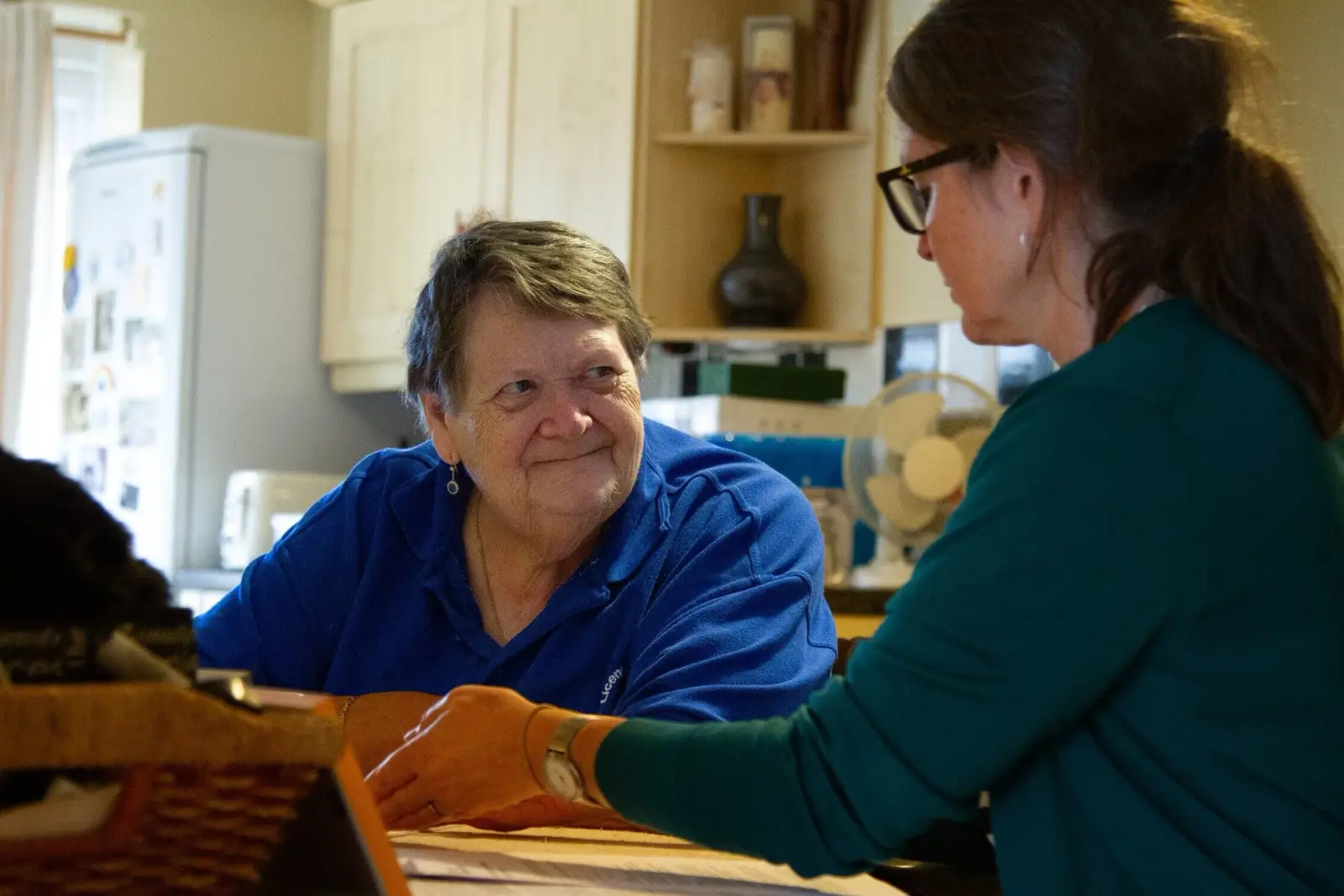
This is why a lot of people rely on the support of a visiting carer. Visits can be planned around meal-times and carers can provide as much or as little assistance as required. Being their each day also ensures an older person has consistent companionship.
What can a visiting carer help with?
- Creating a weekly meal plan
- Shopping for fresh ingredients (either online, or accompanying an older person to a local shop)
- Cooking and preparing fresh meals to personal tastes and dietary restrictions
- Assisting an older person who wants to cook for themselves (i.e breaking down a recipe into smaller more manageable tasks and supervising for safety)
- Creating a comfortable environment to eat in (i.e setting the right light and noise levels)
- Sitting down with an older person while they eat to make meal times more social and fun
- Helping with technology so an older person can video call friends and family at meal times
- Making food easier to eat by cutting it up, making it softer, or providing finger foods
- Supporting a balanced diet, and raising the alarm if something's not right
- Encouraging an older person to drink enough water
- Providing reminders for any medication that needs to be taken with their food
Elder is an award leading platform that matches self-employed carers to families and older people needing a wide range of support. With Elder you can –Choose the same carer or team of carers for your home visitsEasily book and manage your care schedule onlineControl exactly what tasks your home carer helps with and when
Using a meal delivery service
Whether support is coming from friends and family or a visiting carer, some families also use a meal delivery or meals on wheels service to make meal times even easier.
Meal kits and recipe boxes
These are a great time saver for older adults who still like to cook. They can receive weekly deliveries of pre-portioned raw ingredients and step by step recipes, which a carer can help them to prepare if needed. Recipe boxes are also a great way to reduce food waste as you can order boxes depending on the size of the household.
Meal on wheels
Meals on Wheels deliver pre-prepared meals directly to a person's home. These services usually offer a wide range of foods in various forms, including frozen meals, and can cater to a wide range of different dietary requirements.
You can arrange meals on wheels through private companies and some local councils. Contact your local council to see if they offer a food delivery service, and whether your loved one's care needs could qualify them for a discounted rate.
What are the benefits of using meal delivery services?
- If a loved one has a few different care needs, pre-prepared meals can give a carer more time to help with other things, such as personal care or companionship
- It can give you greater flexibility when arranging care visits. If your loved one can safely heat up the meals themselves, then visits don't need to be scheduled so strictly around meal-times
- It eliminates the need to do a big food weekly shop which an older person may find overwhelming (However they can work out more expensive than shopping at the supermarket)
- It creates opportunities to try new dishes and foods, which can make meal times something to look forward to.
If you choose to use a delivery service, it can help to organise delivery days around a home carer's visits, to help ensure food is stored in the right place and in a timely manner.
Find your ideal carer
We have connected over 5000 families to carers so far.