Living Well
12 summer safety tips for older people in hot weather
Paola Labib | Editorial Contributor
9-minute read | 01/11/2017
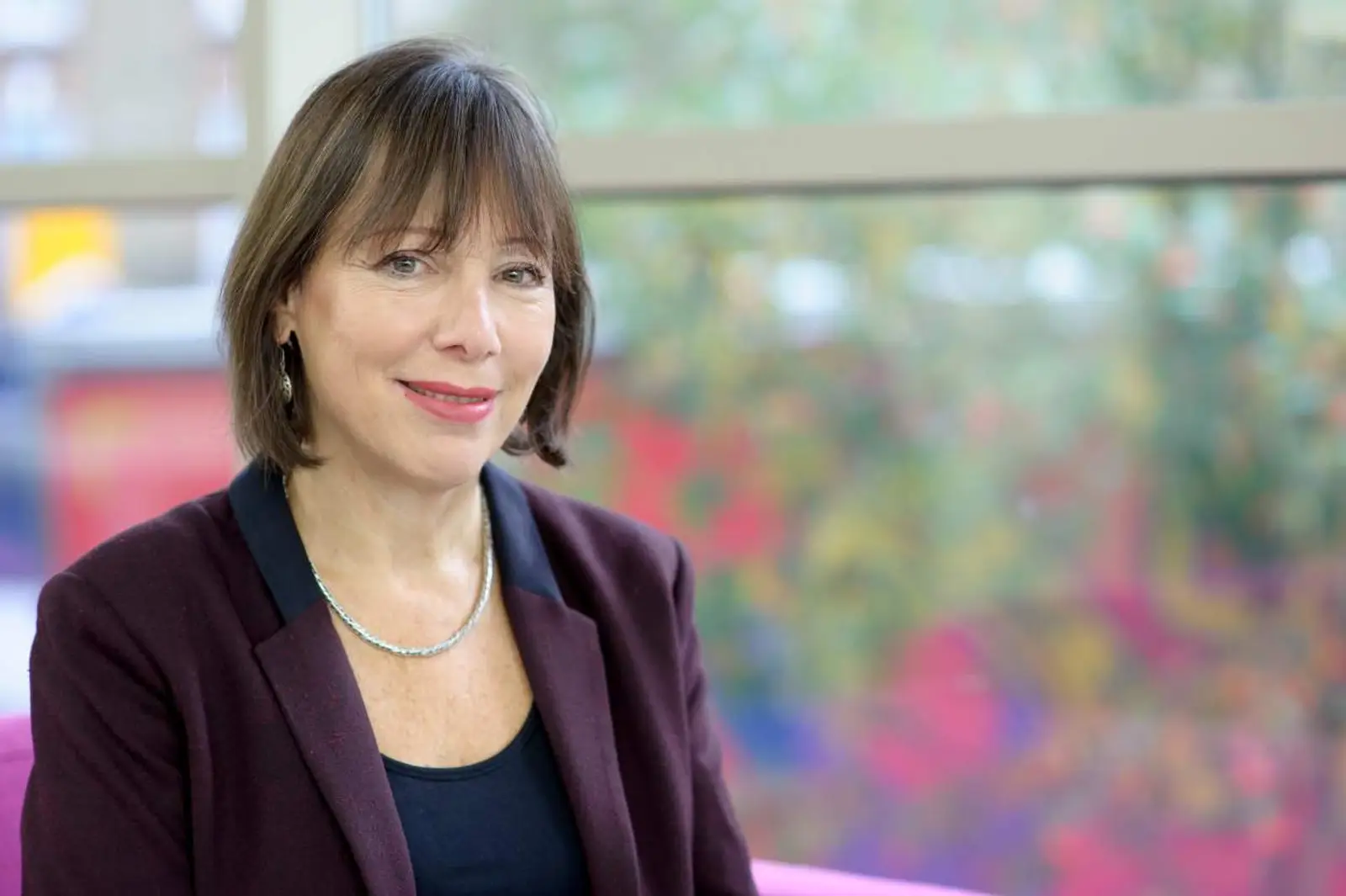
We talked to Anne Karpf about the cultural anxiety around ageing and the question of what “feeling old” means.
Anne Karpf is a columnist, writer and sociologist – and author of the book How to Age. Winner of best independent voice on older people’s issues in the Older People in the Media Awards 2014, she is a reader in professional writing and cultural inquiry at London Metropolitan University. We talked to her about the cultural anxiety around ageing, the question of what “feeling old” means – and the impact of austerity on the narrative of later life in the UK today.
I wrote a weekly column for The Guardian’s Family section between 2005 and 2008 and noticed that in it I kept returning to the subject of ageing. My father was 50 when I was born, and my mother was 39, and that seemed to me to be normal. I also had my children late, and my husband is 16 years older than me.
Both he – and my parents – embodied a challenge to every stereotype of ageing, although I’m always wary of holding people up as examples. There’s a pervasive thing at the moment where people cite 90-year-olds who run the marathon as proof of something.
As I started to age myself, though, I didn’t ever reach that point where I felt “old”. It’s a common trope: “I don’t feel old – I feel just the same inside”. And it makes you start to think well what does it mean to “feel old”?
What people mean when they say this though is they don’t feel the way the stereotypes of ageing tell us we should. There is no way of “feeling old”, especially given that people become more diverse as they age. I was interested in exploring that.
I found it difficult to get a publisher at the time. In 2009 I spent almost a year on a book proposal and my agent was confident the book would get picked up quickly. It did, but it then went to an acquisition meeting where the response was: “no one buys books about ageing”. The same thing happened with a second and then a third publisher.
Looking back, I think I was at a stage in my own ageing where I hadn’t really come to terms with it, so it was quite an angry book proposal initially. However, I also think ageing hadn’t really hit the public agenda at the time.
My book has since been published in the UK, US, China, Brazil, Romania, Bulgaria, The Netherlands and South Korea, and there’s clearly interest in ageing now – but also a lot of anxiety around it.
One of my strongest motivations is to try and dispel that anxiety without denying ageing – because I think the way that people have dealt with it is to reverse all the usual caricatures with a “We’re baby boomers, we’ve vanquished ageing!” idea. That is just as punitive as the narrative of decline, where ageing is seen as a journey of diminishment.
I think it’s partly been led by increasing information about the changing demographic – the ratio of older people to younger people in our culture. That has as much to do with people not having children, though, as people growing older. Some of that is due to freedom from the societal obligation to have children – but some of it is because people can’t afford to have children.
I think the ‘austerity agenda’ has fed this and the idea of what we can afford as a society. Alan Walker, a social scientist, spoke at a recent conference about how the Victorian idea of the deserving and the undeserving poor has been returned to prominence. Older people and people with disabilities were once exempt from that idea – but this is not the case anymore.
Within this austerity agenda too there’s also now a narrative of intergenerational unfairness, which is appalling. It seems to have a kind of liberal agenda that we should all be caring about young people who are not enjoying certain benefits that previous generations had, but in fact it’s about pointing a finger at older people and saying, “you’ve used it all up”.
The gifts that ageing gives us are invisible in popular discourse. It’s as if it’s all loss, and there’s no gain.
I feel so grateful that I had access to free education and could afford to buy a house, things that young people don’t have now. And I’m so angry about this. These things should be extended to everyone and, as the fifth largest economy in the world, we could clearly afford to do so if this were our priority.
The austerity agenda has meant that people have turned against each other and are hunting for the guilty party – and they’re looking in the wrong place. Austerity is a system that victimises individuals and groups, and old people are among those groups – so suddenly old age has become visible in a very bad way.
Young people are rightfully angry, and old people should be angry on their behalf. The corollary is that young people should be angry on behalf of old people too, but because of frightening ageing stereotypes, they don’t want to believe they’re ever going to get old.
This is a flaw in our education system. We should be getting people to think about the arc of life – that they are going to go through all these different life stages, and the qualities and resources that they’ll need to do so.
Importantly they also need to lobby for the society they live in to provide the things that will be necessary. Young people need to see themselves as ‘old people in waiting’, and not to regard that as terrifying.
The publishers wanted me to call the book How to Grow Old – I wanted to call it How to Age because there are so many books about how not to age. I’ve met a lot of older people who feel encouraged by it, but I wanted to speak particularly to people in their early 30s and early 40s, who are just beginning to feel anxious about ageing.
You hear people talk about approaching their 30th birthday, for example, and they’re so scared. They feel they’re setting foot on a rocket that is going to take them to ‘planet old’ where anything that makes them recognisably themselves will disappear.
The opposite is true – when you age you take those resources you’ve accumulated in your life with you. They’re what enable you to make better decisions and live life more fully. Ageing concentrates the mind.
People have said to me that the reason they like being older is they know what’s important and also that life is finite, and they don’t waste so much time on inconsequential things. The gifts that it gives us, though, are invisible in popular discourse. It’s as if it’s all loss, and there’s no gain.
I do think the sheer force of numbers will force change, but another thing I think will make a huge difference is climate change – because ways in which we live now are unsustainable. I think the combination of demographic and climate change will challenge many models we have around education, work and medical care.
I’m a short-term pessimist and a long-term optimist, but I think it will be all hands on deck. We’ll need the different resources and abilities and energy levels of every age group to meet the challenges.
These ideas play into to our greatest fears, rather than really engaging with them properly. I think it’s profoundly selfish, the idea of ending ageing or death – because what about the people who are going to come after us? Are we saying that we’re so important that we’re going to hog the planet and not allow them space?
There are all kinds of ways in which technology can help us to live better and enable different people – not just the able-bodied young, but the idea of it eradicating ageing seems hubristic. I come back to the idea of the arc of life – we have to live it, and it’s not easy; we have to mourn the stages of life as we go.
I also fear ulterior motives…I’ve heard people talk about how an old woman living on her own could have a robot that checks that she’s not dehydrated or has taken her medication. I’m not sure I’d want to get to that stage if the only company I was going to have was a robot…
Ultimately, although technology has a valuable role to play, I don’t buy the idea that it is the cavalry and will come and save us – and I don’t think it can help us understand the really big questions in life.
I am also wary of the dangers of technological determinism. Humans shape technology, and there is a complex debate going on now about what technology can do, what we want it to do – and importantly who is in charge of it and to what end.
Anne teaches at the London Metropolitan University. Her research interests include ageing, the human voice, psychoanalysis, representations of health and medicine, practices and ideologies of writing, and more.
How to Age by Anne Karpf is available on Amazon and you can follow her on Twitter.
For more information about Elder or to discuss private live-in care, please contact one of our friendly expert care advisors who will be happy to answer any questions you may have.
Paola Labib | Editorial Contributor
Zenya Smith | Editorial Contributor
Mark Acheson | Editorial Contributor
Zenya Smith | Editorial Contributor

Zenya Smith | Editorial Contributor
Zenya Smith | Editorial Contributor