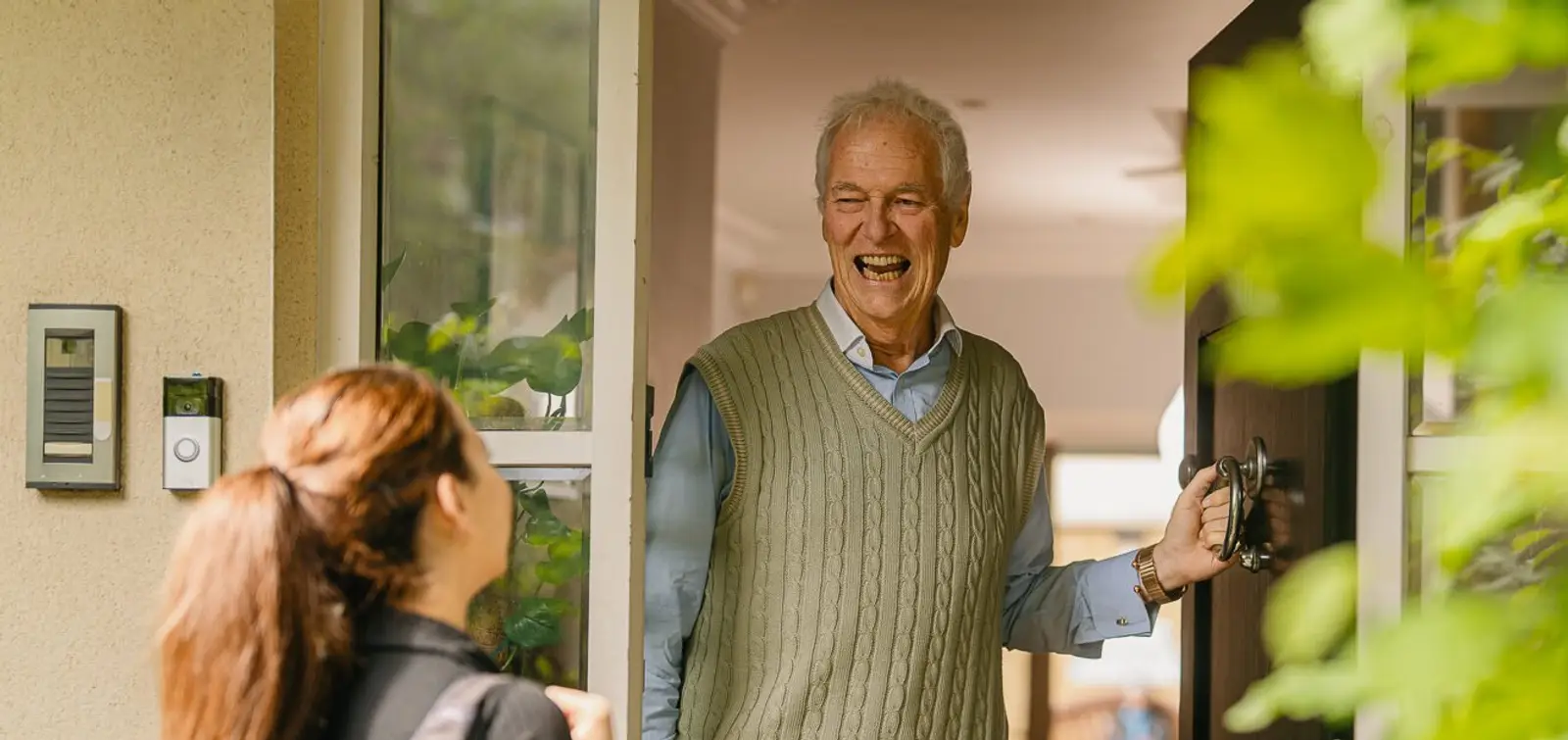
Independence at home tops adult social care priorities in UK survey
4-minute read | 25/03/2026

Editorial Contributor

Helping people remain independent at home is the most important priority for adult social care, according to new survey findings, placing independence ahead of cost and service quality in public opinion.
The British Social Attitudes survey found that 46% of respondents selected helping people stay independent at home for as long as possible as one of their top priorities for social care.
This places independence at home at the centre of how the public thinks adult social care should work, ahead of both cost and service quality.
It was followed by:
- Making social care more affordable (45%)
- Improving the quality of social care services (44%)
This preference for independence at home is consistent with wider research. An earlier Elder article on home care preferences found that home care is the most commonly stated option for later life, with many families choosing live-in care to support independence at home, compared with 8% who would choose a care home and 6% who would choose to live with family.
The British Social Attitudes survey offers a unique look at how the British public are feeling about their health service. Carried out every year since 1983 by the National Centre for Social Research, it provides a barometer for understanding not only how people feel the NHS runs nowadays, but also what is driving their satisfaction (or, more often in recent years, dissatisfaction), how they rate individual services, and what they make of social care.

Priorities for adult social care differ between age groups
The importance placed on independence at home in social care varies significantly by age.
- 66% of people aged 65+ prioritised staying at home
- Compared with 40% of those under 65
Younger respondents were more likely to prioritise:
- Affordability in social care
- Quality of adult social care services
This reflects different pressures and expectations depending on life stage and likely need for care. This also highlights the growing role of personalised options such as live-in care and specialist support like dementia care, which are designed to help people remain safely at home.
Satisfaction with social care remains low
Despite clear priorities for adult social care, overall sentiment towards social care remains subdued.
- Just one in seven people (14%) are satisfied with social care
- Nearly half (49%) are dissatisfied with social care
Although dissatisfaction has fallen slightly from 53% the previous year, satisfaction itself has not significantly increased, suggesting limited improvement in how people view social care services.
A further 34% said they were neither satisfied nor dissatisfied, indicating a sizeable group with neutral or uncertain views on social care.
Unlike the NHS, where satisfaction rose slightly in 2025, adult social care shows no comparable improvement in public sentiment.
Experience of social care shapes opinions
People with direct experience of adult social care are more likely to hold strong views.
- 20% of those with contact are satisfied with social care, compared with 12% without
- 54% of those with contact are dissatisfied with social care, compared with 46% without
This suggests that while experience increases engagement with social care, it does not necessarily improve perceptions.

A clear but cautious picture for social care
Overall, the findings show a consistent pattern. Independence at home is the most widely shared priority in adult social care, with services such as live-in care increasingly central to how that support is delivered, but confidence in social care remains limited.
Together, the results suggest a system where public priorities for social care are clear, but satisfaction remains low.