Living Well
12 summer safety tips for older people in hot weather
Paola Labib | Editorial Contributor
10-minute read | 13/11/2017
We talked to Professor Alan Walker about the New Dynamics of Ageing Programme, its aims, the importance of its findings.
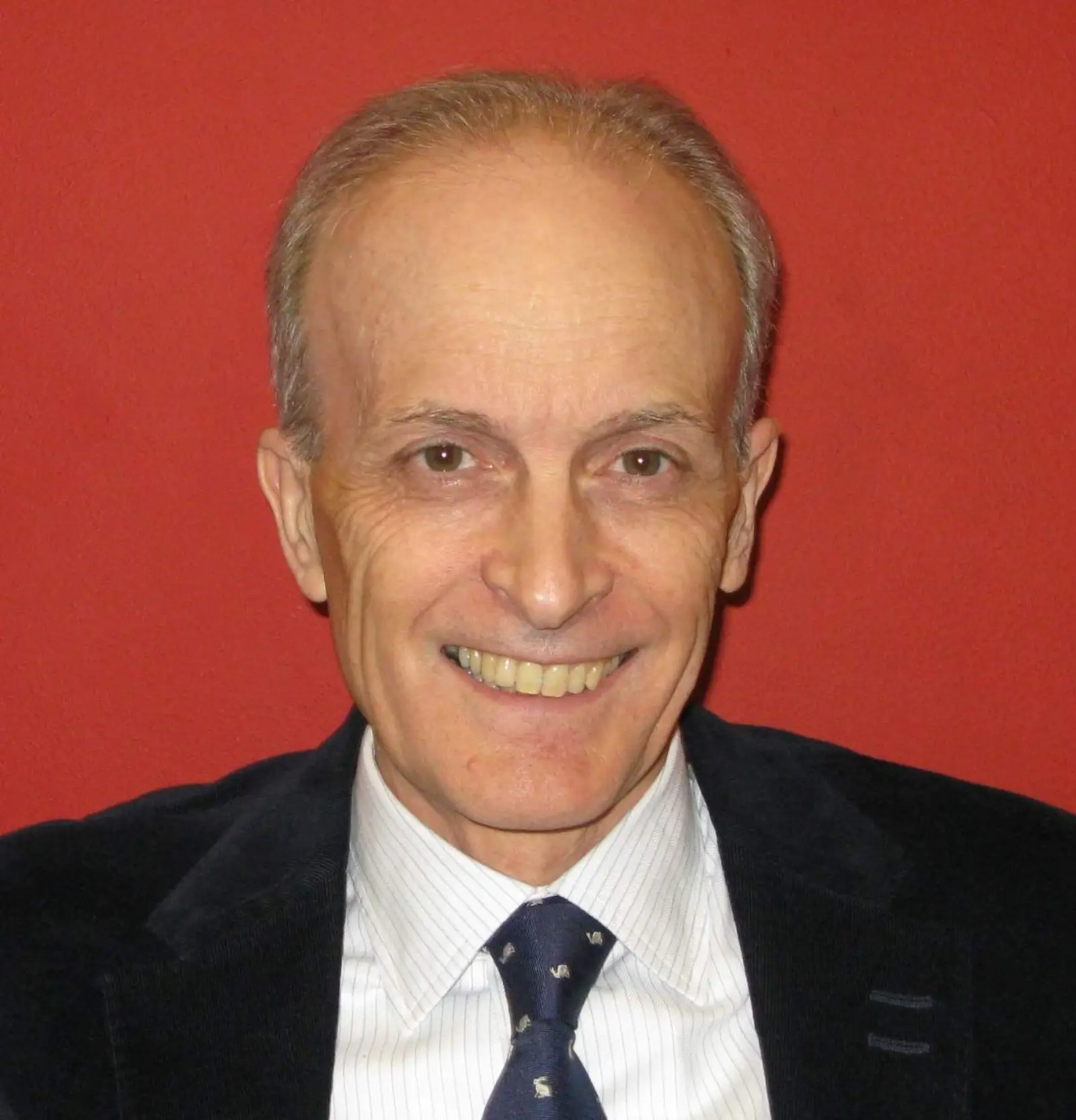
Professor of Social Policy and Social Gerontology at the University of Sheffield, Alan Walker was Director of the groundbreaking New Dynamics of Ageing Programme, the largest and most ambitious research Programme on ageing ever mounted in the UK. We talked to him about the Programme’s aims and the importance of its findings for how we as individuals and as a society approach the challenges and potential of longevity.
The Programme was established by five UK research councils who had recognised that for too long ageing, which is a holistic experience, had been studied in separate disciplinary boxes. The research councils banded together in recognition of the fact that ageing is one of the great challenges we face and they wanted to ensure that there was a good flow of research evidence to support new policies, practices and products.
There was a pooled sum of money, and the disciplinary communities were invited to make bids – the most interesting aspect of the Programme was that most of the money was spent on inter-disciplinary projects.
It can be difficult to move the world of science, and funding is one way to do that, so the scientific communities were encouraged to collaborate by applying for funding as multi-disciplinary groups. It’s one of the main reasons why the Programme was unique, and I think so exciting.
If you go to the NDA website, you’ll be overwhelmed at the breadth of projects, from the biology of ageing to engineering, medical issues, social science, literature and art. It’s impossible to select one thing, but I would highlight the work that emerged in the Programme from the collaboration between biologists and social scientists around longevity, which was particularly interesting.
Longevity, or life expectancy, is increasing at a continuous rate on average in Britain and other developed countries of two years for every ten years of life. The Office for National Statistics predicts that half of all babies born this year will live to be 100 – at least. There are over 13,000 people in England and Wales at the moment over the age of 100, and 600 of them over the age of 105.
If you speak to people across old age, their focus is not so much about life expectancy, but what their health will be. In scientific terms, we call that ‘healthy life expectancy’. The problem is that in Britain, unlike some other countries, healthy life expectancy has not kept pace with life expectancy.
That is a challenge because it means that the demand for health and social care will go up, the overall cost of care will rise and people’s lives in old age will be the poorer because in human terms they will experience more disability, more functional limitation.
What I like to do is to ask older people themselves. In the NDA Programme, Ann Bowling’s research on older people’s perceptions of quality of life found that for people aged 65 and over, health, family relationships, neighbourhood relationships and the ability to get around are always top of the list. Surprisingly, while finance is in the top seven or eight, it’s not at the top.
That’s why the research in the NDA is so important because what it’s telling us is that while ageing is inevitable, it’s also malleable. The assumption made by policymakers and commentators is that if people get old, they’re going to be needing health and social care.
That’s not necessarily the case: that older people age differently, and it’s possible to intervene in that ageing process to improve the later life outcomes. I think that that is a breakthrough piece of research with huge potential to improve the quality of later life.
"The starting point is to recognise that ageing is lifelong. Policy makers are still obsessed with ‘old age’, and not ageing". - Professor Alex Walker
There is nothing pre-determined about ageing, so there’s no ageing gene, it’s a matter of what biologists refer to as the environment, which is everything else. This means that we don’t have to sit on the sidelines and just watch people age, we can give them advice about what a healthy outcome in later life will consist of, and how to ensure that if they do reach 100, their bodies and minds are in the best possible shape.
If you compare the cause of functional limitation in old age between genetics and environmental factors then the environmental factors outweigh the genetics by a factor of four to one – 80 percent can be attributed to things like air pollution, deprivation, stressful work, inactivity and diet.
That tells us there are things that individuals can do to intervene in their ageing process, but at the same time there are things that public policy can do in order to intervene and improve later life outcomes. A crucial dimension of this is inequality.
I mentioned the increasing life expectancy, but that differs across social class and other groups, so the poorest people living in the most deprived areas have lower life expectancy and lower healthy life expectancy than the better-off who live in more affluent areas. Deprivation and poverty are crucial in determining who survives into old age and in a healthy way.
One would hope so! But there’s no guarantee about research being picked up by policymakers. I think part of the problem here is that ageing is a lifelong process and policymakers tend to have short-term views, often just to the next election. If you’re going to tackle the ageing issue, you need a long-term view.
Alan Walker is a Professor of Social Policy and Social Gerontology at the University of Sheffield.
The New Dynamics of Ageing Programme is a research initiative aiming to improve the quality of life for older people. Follow them on Twitter for more information.
For example, if I were an influential policymaker, I would be introducing sessions in schools to teach children about this revolutionary change in their life expectancy and what they can do over the next 90 years to ensure a healthy and happy later life.
I would also be running physical exercise programmes for all ages to prepare for later life – even moderate exercise has a beneficial effect on physical and mental capacity. Of course, there are bigger things that need to happen too: we need to reduce air pollution and cut the amount of sugar in our diet, and that’s something only the Government can really do.
My view is what’s called a ‘life course perspective’ – the starting point is to recognise that ageing is lifelong, and at the moment the policy-makers don’t understand that. They see ageing in terms of old age and increasingly late old age, so the focus is overwhelmingly on demand for social and health care.
Taking a life course approach means every generation should be doing something to foster a healthy older age – from educating children to enabling work-life balance – such as dealing with the mega-issue of stress at work – what can employers do to reduce stress levels for their employees for example?
The traditional life course has been segmented, and none of these segments overlaps. The first stage is childhood and adolescence when you get educated, this is followed by working life, and then post-working life or retirement.
But of course the middle section of the life course has changed so much, the early section has changed a lot too because young people are staying in education longer, and the latter part’s changed because old age is extending further and more people are working beyond pension age.
I’d like to turn those columns on their side, so all three are continuous across the life course. Education shouldn’t just occur in the early stage of life it should go on throughout one’s life, with all the mental capacity benefits that brings.
The working part might consist of a range of different jobs interspersed with periods that in previous generations were all lumped together at the end and called retirement. But the evidence now is that many people want to work beyond pension age, so the boundaries between working age and retirement are being broken down.
There are the vested interests as well because there are groups that focus just on old age and a tendency there to perpetuate the notion that old age is separate from the rest of life. I’m determined that we should see the connections and regard ageing as a life course, lifelong event, with later life just one end of the life course.
My focus is on inequality. The rhetorical question is: how can you have two women both aged 90, one of whom is physically fit and the other one is in a nursing home and can barely move.
You can’t explain those outcomes by genetics. It’s about what happened to them over their life course, and my priority is to find pointers for policymakers to be able to intervene to ensure that everyone gets to later life in as fit and healthy a state as possible.
It’s an area where there should be a partnership between citizens and the state. It’s clearly a role for government to set the conditions and encourage people in the right direction, and there’s a role for individuals to take care of themselves as well. It should be a win-win for citizens and the Exchequer, but policymakers are still obsessed with old age, and not ageing.
This interview was part of a series brought to you by Elder.Whether you are looking for live-in care in London or require assistance in another part of the country, Elder will ensure that all of your care needs are taken care of.
Paola Labib | Editorial Contributor
Zenya Smith | Editorial Contributor
Mark Acheson | Editorial Contributor
Zenya Smith | Editorial Contributor

Zenya Smith | Editorial Contributor
Zenya Smith | Editorial Contributor